What they don't tell you about selling your startup
Download as PDFListen to NotebookLM audio
When I received the term sheet to sell WP Curve to GoDaddy, I sped-read an 1100 page book on mergers and acquisitions. I scrambled to contact an investment banker, asked people who had run the gauntlet and tried to learn everything I could to understand this mysterious ‘process’.
But the books, blogs and bankers didn’t teach me the following lessons.
My goal in sharing my POV is to steer you away from the existential crises that befall a post-acquisition founder and point you towards a smoother outcome with some tactics, frameworks, and stories. If there’s a word you don’t understand, visit this handy-dandy list of M&A jargon definitions.
Disclaimer: All sources are anonymised to protect the innocent/incompetent, and all claims I make below are prefaced with “allegedly.” These anecdotes are based on my experience and the clients I’ve helped through buy/sell-side acquisition.
1. Your number is YOUR number
I’ve seen a founder happily exit for less than $1MM, and it was a huge, life-changing experience for them. I’ve also seen a founder walk away from a $10MM+ exit, pre-revenue (what the heck!?), and smile on the other side.
Context matters.
Let’s say you’re a bootstrapped founder with a mountain of personal debt, three kids under ten, and a fractured relationship with your significant other because of the stress of the grind. You might be thrilled to sell for 2-4X annual revenue with a staggered earn-out, a handsome salary, equity and some tempting RSU refreshers (for the record, they’re not particularly refreshing).
Alternatively, you could be a post-economic 20-something, thanks to being an early hire in a company whose valuation has 100x’ed since you joined. You’ve sold some stock, are wildly employable, and have a great professional network. You might not have a target number because you play an entirely different game.
I repeat, context matters.
So, how do you figure out what number works for you? This might sound fuzzy and woo-woo, but people can intuitively feel it when they’re close. Some questions I’ve asked founders to help them find their number are:
“What number would be non-offensive to you?”
“What is your worst case, base case and best case scenario?”
“If you had to walk away immediately post-sale, what would you feel comfortable with?”
Notice I’m not asking, “What are the market comparables for the last ten transactions in the same price range as your company?” or “What did they offer and realistically counter with?” or “What did Dork Co down the street sell for?”
I’m also not asking, “What do you want to work on post-sale? ” etc.
Railroading this question helps you find an agreeable number.
2. Define an agreement that suits you
Next, we have terms. Terms are the provisions and details you agree to when signing the definitive agreement to hand over your company.
I’ll give you an overview of the acquisition terms below. If you want to skip ahead and come back to this part later, click here.
The A to Z of M&A definitions
ARPU: Average Revenue Per User. ↵
Asset sale / stock sale: An asset sale allows the buyer to limit their liability and cherry pick assets. This structure usually leaves you holding the bag on tax, depending on your company structure. A stock sale is higher risk for acquirer but usually easier tax-wise for you.
Bootstrapped: Self-funded and haven’t taken any investment from others to build your company. ↵
CYA: Cover your ass. Useful in due diligence.
Compensation for incoming founder: This can be broken down into salary, equity, performance bonus, sign on bonus, pathway to promotion (e.g. you write into your contract that you will be appointed x role by x day) and refreshers. I recommend negotiating the purchase price of your company separate from your individual compensation, as they are two different discussions (and it helps you to not conflate one with the other).
Definitive agreement: The final, binding contract with the buyer—signed after negotiations, spelling out every detail: price, payment, warranties, and what happens if things go south. ↵
Due diligence: When the buyer pokes around your company—financials, contracts, operations—to verify it’s worth what you say. It’s them making sure there’s no dirt under the rug before they pay. You’ve got to open your books and prove your value, hoping they don’t find a reason to slash the price or bolt. This process can be long and arduous, but I’ve learned a few hacks over time. ↵
Earn-out: An earn-out is an agreement where you get paid extra later, but only if specific goals are hit. The buyer may pay you a chunk upfront, and then promises more cash or stock down the road if the business keeps performing well (like hitting revenue targets or profit milestones). ↵
Holdback: Think of this as an insurance policy for the buyer - they keep a % of the purchase price to protect against any claims post-acquisition. Sometimes confused with Lean Back by Fat Joe and The Terror Squad.
Indemnification: A very important clause to get right. It’s effectively recourse - if something goes wrong, you’re on the hook for paying (e.g. a lawsuit or tax debt pops up).
Non-compete: Post-acquisition, buyers will generally not want you to start the same or a similar business within a given window of time. Nikita Bier is a great example of a person who must have negotiated well in the non-compete, because he’s launched and exited a very similar product, twice.
Optics: Corp speak for when something looks great to the C level / executives and board of directors. ↵
Post-economic: Self-funded and haven’t taken any investment from others to build your company. ↵
Payment terms: Fixed price, earn out and/or receiving equity in buyer’s company instead of cash. Receiving an all cash, up front payment that doesn’t anchor you to the acquiring companies performance or the broader vacillations of the stock market feels nice and is a nice risk hedge, but can leave a ton of money on the table if the acquirer’s stock appreciates.
Payment timing: If you’ve taken a huge windfall out of the business in the current tax year and could either close the deal in the same financial year or in the new one, it’s worth talking to your accountant to optimize when/how you get paid.
Re-org: Organisation-wide initiative that involves moving and/or sacking staff, changing managers and changing reporting lines. A monumental drain on resources and progress. ↵
Reps and warranties: These are the little promises you make about the state of the company. They can also get you sued if you misrepresent, so please don’t take any shortcuts. Assume anything you hide will be found in due diligence. As an aside, frontloading company warts can be used as a enterprise value maximization strategy, but that’s another post for another day.
RSU: An RSU, or Restricted Stock Unit, is a type of compensation companies give to employees. You get stock at a future date, once certain conditions are met—like sticking around for a set time (vesting period). Think of it as a carrot dangled in front of you: you don’t own the stock yet, but if you stay loyal and the company does well, you’ll get it later. Once it vests, you can sell it for cash or keep it. ↵
Term sheet: The buyer’s first stab at laying out the deal—price, payment terms, and key conditions—before the lawyers hash out the full contract. It’s like a handshake on paper, showing what they’re willing to pay and how, but it’s usually not legally binding yet. Some dodgy companies will feign interest and give you a term sheet to get a closer look at your business, so tread carefully (I’m speaking from first-hand experience). ↵
A founder I advised had a marquee customer who made up 75% of their annual revenue. Their product was part of the customer’s operational plumbing.
As the founder’s deal progressed from a term sheet to due diligence and the along to a definitive agreement, the acquirer introduced contingencies, performance targets and clawbacks of the total purchase consideration that were explicitly tied to this customer account.
The proposed terms put the founder over a barrel, but they didn’t immediately see it. They were blinded by the same filter that got them into a position to sell in the first place. They were more comfortable than most when it came to achieving the seemingly impossible, so they had a greater appetite for risk and a massive belief in their ability to overcome challenges most would balk at (and rightly so).
This double-edged trait is that founders can be (kinda) insane. Often, they are running towards a goal that no one else can fully comprehend in a problematic environment while trying to motivate a team to follow them to march, shoulder to shoulder, into the abyss.
Post-acquisition, you’re no longer master and commander of your fate, so when negotiating a deal with an acquirer, you can dial your attitude of “ready, willing and able to do the impossible” down just a wee bit.
You can assume that any or all of these events happen after you close the deal:
- The business sponsor of the deal exits the day before the close
- The strategy of the business unit you’re joining does a 180
- The ‘superstar’ team you were promised is actually a skeleton crew of people destined for the mailroom
- Market conditions take a colossal nosedive due to massive disruption
- All of your logo customers want to renegotiate and/or cancel their contracts
Yes, it’s very ‘sky is falling’, BUT let’s manage our risk.
Remember our founder with the 75% revenue concentration?
I advised them to remove any contingencies related to this marquee account. My argument? You have no idea how this customer will react, and you should not be held responsible if they don’t want to do business through the acquirer. I also noted the acquirer might try to jack up the contract value, change contract terms, remove resources supporting the account or rub them the wrong way.
Three months after the deal closed, I got an email from the founder:
“You’re not going to believe this, but [marquee] customer just cancelled.”
I’m so so so glad they listened.
🫡 Copy free 105 question due diligence Google doc
3. Earn out may equal burn out
First, some market data: Baruch Lev and Feng Gu, co-authors of The M&A Failure Trap, studied 40,000 M&A deals over the past 40 years and discovered that roughly 70-75% fail.
Remember how EVERY SINGLE FACTOR you’re banking on might change on the day the deal closes? Yeah? An earn out takes that concept and doubles down on your willingness to do the impossible but leaves one crucial factor out.
You are no longer the boss.
You are creating a dependency for your payout to be supported by a foundation which was built by your acquirer. This foundation can wash away at any point; whether it’s a re-org or a refresh of strategy, you’ll be left holding the bag (and it’s not full of cash or fully vested RSUs).
4. Your product’s future is out of your hands
The product I cofounded lives on nine years after the acquisition and seven years after I left the acquirer. It’s a slightly wonky measure of success, but I’ll take it anyway. It’s a far different outcome than more high-profile products like Sunrise (a $100m acquisition, died in year 3) and Mirror (a $500m acquisition, died in year 1) experienced.
But just like your number, context matters.
WP Premium Support was launched into a mature business unit in a portfolio of commoditised hosting products. My product created a fresh new line of business with a healthy growth rate and good optics. It fits a natural attach motion (selling support with hosting is akin to slinging a side of fries with a burger). My product helped to maximise ARPU from an existing line of commoditised products. But, in an alternate universe where my product was the company’s next big bet and didn’t hit the plan, I might be mourning my product. Gone too soon, with so few tickets resolved.
So, does the shelf life of your post-acquisition product matter to you?
Once you sign the definitive agreement, I hope it doesn’t because you have little control.
If you’re a mercenary and opportunistic founder, you might care less. But if you’re a pixel-harvesting craftsperson who lives and breathes your product, you might experience economic irrationality.
I’ll keep this anecdote vague as it’s not my story to tell: a well-known and charismatic founder with a successful bootstrapped SaaS walked away from an eye-watering deal with a gargantuan software company for this very reason. He gave more shits than most would about the future of his product and couldn’t reconcile the expectation of achieving a parabolic growth curve while maintaining his artisanal approach to product design. The juice wasn’t worth the squeeze and the idea of navigating a sleep slalom of earn-out milestones gave him the heebie jeebies.
This begs a broader question, though. Is the death of your company as probable as your own? What’s a reasonable life expectancy? Is there a Bryan Johnson type who could help it live forever?
Oops, we’re in existential territory. Back on track!
5. You are no longer a special snowflake, you are now fungible
Assuming you join the acquiring company, you’ll experience a stark reality check. You receive an employee number and you become a cog in the machine. Brace yourself for the following:
- You and your team could be fired for any reason at any point in time. NB: it’s a higher probability event that your business collapses and you then get sacked from your own company, versus randomly losing your job when you’re the owner
- The blood, sweat and tears you’ve poured into your product are now reduced to a revenue line and a percentage growth rate that is compared, like for like, with every other product
- Your product’s trendy name is changed against your will, and you have to gulp down the change with a smile
- Your new manager challenges your direction but has zero relevant domain experience and delays difficult but necessary decisions for months on end
- The quarterly reorg drops with remarkable predictability. You’re OK to play corporate musical chairs, but you’re forced to don the executioner’s hood this time. Your mark? Terminate your favourite employee - the one who stood by you in the aforementioned abyss
- Another department leader attempts to stage a coup, acquire, and rightsize your team but hamfistedly reveals their intentions by publicly sharing a private DM. Awkward
- Your new generic title comes with generic responsibilities including “alignment” meetings, “calibration” sessions and “meetings to prepare for meetings” - I wish this were satire
- Your customer-driven, data-informed and thoughtful product strategy gradually morphs into executive bird feeding. You regurgitate the executive’s strategy straight back to them and you lose your spark
Yes, I am being extra provocative to help land a point.
Everything you’ve built could erode to dust, but you decide to stay or move on.
🫡 Copy free 105 question due diligence Google doc
6. You don’t have to sell to start your legacy
https://youtu.be/NWeh4A600E0?si=3f44v3fP4HGc0u2c
This scene is remarkable for three reasons:
- Heath Ledger (RIP)
- Harvey Dent only realises the nurse is the Joker after the mask comes off (lol)
- The Joker has a trait in common with a lot of entrepreneurs: they just do stuff
There’s nothing wrong with operating in this “just do stuff” mode and it’s more common than you think. Founders spend a lot of time dealing with fires and drama in their business, which can make it hard to plot out a post-liquidity path.
Let me revisit founders being either mercenary or craftspeople - anything binary feels limiting. Some founders fit a third archetype. They leverage their successful business to contribute generously to communities in need, when frankly, no one asked them to. They are purpose-driven founders; using their unique skills to make their corner of the world a better place. This is the feel-good “life’s work” type of mission that only a rare few get the opportunity (see: privilege) to think about, so I’m so very inspired when they do. If you are one of these people, please immediately connect with me on LinkedIn.
Here are some examples that have personally inspired me:
- Todd from Financial Mentor created a program and community to help people achieve financial freedom. As a former hedge fund investment manager who retired at 35, his time and energy could generate a much higher financial ROI by simply investing and sipping pina coladas, but instead he focuses on “personal development and how the pursuit of financial freedom provides a transformational path to personal fulfilment.”
- Naveen from Next Vacay has implemented profit-sharing to “touch the lives of other parents and families who have experienced the loss of a stillborn child through sponsorship of research projects, donation of Cuddle Cots to hospitals around the globe, and provision of grief counseling to aid in the path to healing.”
- Jake of Content Allies fame has partnered with Huni Ukuleles, a Philippines-based custom ukulele builder to “reopen the doors, bring back skilled artisans, and reintroduce the world to the beauty of handcrafted bamboo ukuleles… Each purchase now supports not only a tradition of craftsmanship but also a community’s fight for survival and dignity.”
You don’t need to wait for an exit to have an huge impact, be helpful and personally fulfilled. I stumbled and fumbled my way into coaching founders and CEOs waaay back in 2015 while I was still schlepping away on WP Curve, as a way of sharing lessons learned and being of service.
So for you, how can you take action on this? Well, start by answering a few questions:
- Who do you love to help?
- What do people consistently ask for your help with?
- What do they need most help with?
- What cause are you passionate about and would support anyway?
- Is there a way to get started before you exit?
- Would you even need to exit to be able to help?
The good news? You don’t have to wait until you exit to have a massive impact on a community you care about.
7. The challenges don’t get easier, they just get different(er)
I remember the “oh shit, it’s actually real” feeling oh so clearly.
I was eating lunch at a pub just near the GoDaddy office in Gilbert, Arizona and had an urge to check my phone. I logged into my Citibank account and I’d never seen so much money in my life. I thought I might feel relief, joy and perhaps elation. Yep, maybe for about 30 seconds, and then in quick succession, this is what I experienced:
1. I needed a break but didn’t take one. It took five months from first conversation to close the deal and I worked it solo, so I was worn thin. Side effects included weight loss, sleeplessness and high blood pressure. I also had a permanently furrowed brow, which wore off after the deal closed. The amount of co-ordination, strategising, negotiating and microscopic attention to detail took more effort than the initial six months of getting the company off the ground.
Here’s my internal announcement video to the team about the acquisition, a productize.co world exclusive. I hadn’t watched it for 8 years, so it was weird to hear how drained I was, even though it was a life-changing moment for myself and the team. In retrospect I’d do it in an office, after a cup of coffee and maybe have a prompter to read off so I didn’t wait til a minute in to explain everyone gets to keep their jobs if they choose to, but hey - give a guy a break!
2. The public recognition for the sale was validating. The buzz was HUGE after the announcement. We got crunched (anyone remember TechCrunch?) and Twitter was atweet, with a few GoDaddy haters thrown in for good measure. After the initial hype, it turns out that no-one outside of technology knows or cares about an acquisition. Kinda like the response people would give you for buying a house or having a kid - it feels and is life-changing to you, but it doesn’t really matter to them. There were two exchanges I really value from acquisition day.
The first person I emailed was Ken Dovey, my favourite and most impactful professor from my Master’s degree. He roasted a self-assessment essay I’d done and basically told me to stop procrastinating and STFU and start a company. So I had to close the loop to tell him that we did it.
Jason Cohen sent us a really thoughtful email to say congratulations, which was huge. I’ve always looked up to him and count him as a virtual business role model; he is calm, thoughtful and graceful, even under fire.
3. I felt solely responsible for the 32 people I brought with me to GoDaddy. In the past, I had a co-founder who I could lean on to help solve problems that I struggled with. Now, I owned everything and felt like if I messed it up and we got shuttered like so many other acquisitions do, it was on my shoulders alone. The upside of this was that I was able to rid myself of any insecurity that I completely fumbled my way into a successful business. Imposter syndrome, be gone! Or at least, took a momentary knee while I figured out how the beep we were going to scale.
The professional pressure I felt increased by at least 50%. Responsibility is one thing, but being accountable for business results and operating in an entirely new environment with a very different culture was a completely different beast. I loved the culture we brought with us and it kept us afloat when things got rocky. I was so proud that everyone on the team could recite the mission of the product, knew our NPS score, their personal areas of ownership and metrics, our daily revenue numbers and how we were tracking towards plan. My proudest moment was when I walked into a quarterly planning meeting and every bright idea I thought I had was already scoped, prioritized and being considered by the team. I was officially useless, woohoo!
4. The scale and flavour of the post-acquisition problems was quirkier than anything I could have anticipated. Remotely hiring and retaining people from nine countries back in 2016 wasn’t that straightforward, but with a little elbow grease, it was achievable as a startup. At the time, the acquirer didn’t have much, if any, experience with remote staff. This was a challenge. Our original product had been serving thousands of requests per month, but we needed to be ready to 10x the volume without 10x’ing our support team. This was a bigger challenge. We had no marketing budget for launch, so had to get veryyy creative with using the help centre and frontline staff training to make sure our launch and subsequent Go To Market wasn’t a fizzer. This was a many hands make light work type of challenge. The list went on and on, but ultimately, creativity and the awesome team below got the job done.
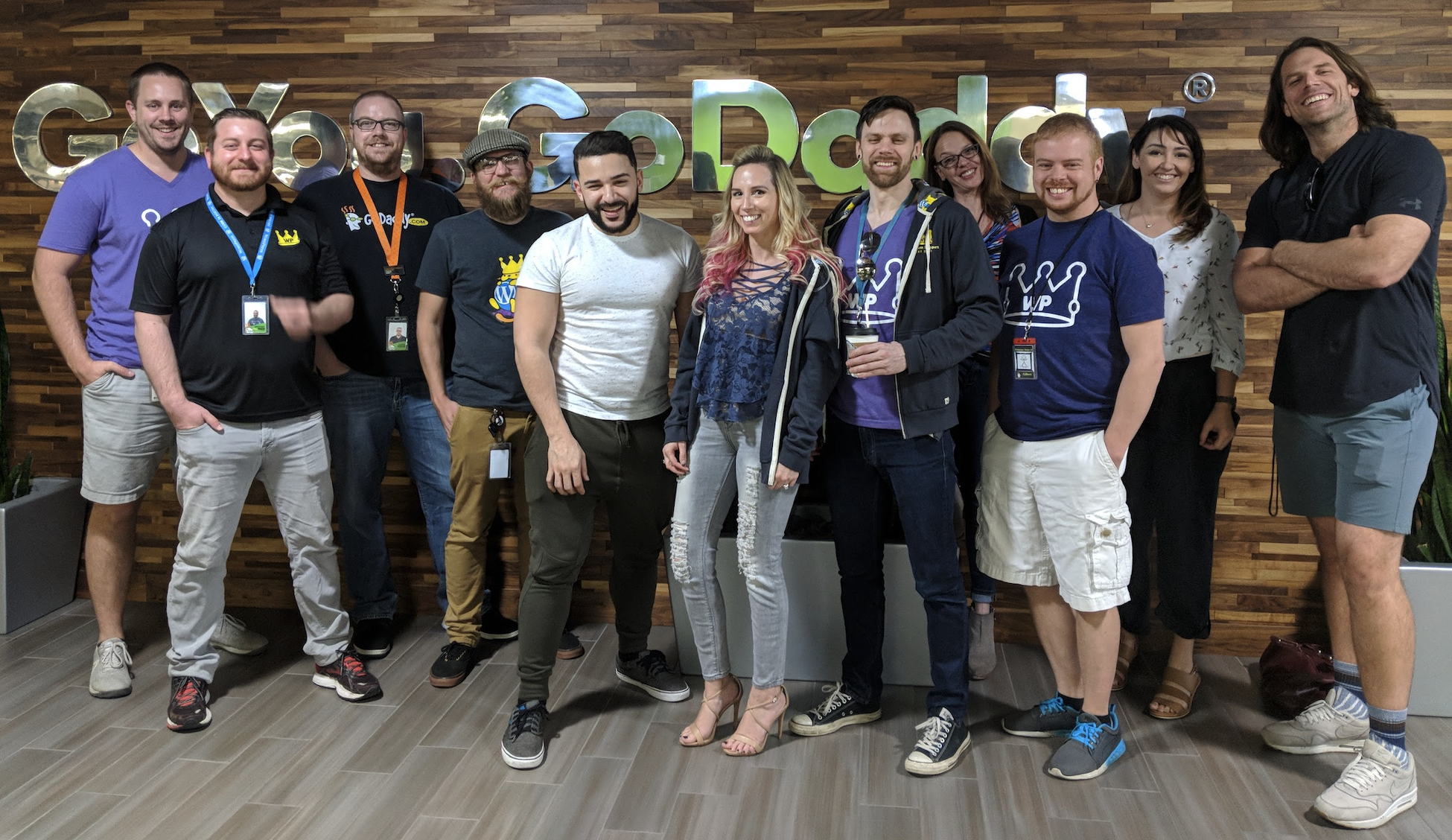
5. I had used work as a way to escape other problems. Being busy was a great way to keep them at bay - as long as I kept occupied, I didn’t have enough time to think about or feel into the problems that I’d compartmentalised for myself. So, a huge lesson was that money didn’t solve my personal issues. In fact, it put a Hubble-powered microscope on them as I could no longer hide behind the “I’ll get around to that difficult personal issue” facade I’d built up. Money did solve for personal comfort and access to more time, which put even more focus on these problems. That’s a different story for a different post.
6. It was weird to have money. During the first few months of launching the company, I found someone on Craigslist (in hindsight, this is kind of insane) and paid $30 gas money to hitch a ride from San Francisco to Santa Barbara to attend a marketing conference. When I got there, I shared a room with a guy I’d never met and ordered an XL pizza, so I’d have a cheap dinner for both nights. Fast forward 3.5 years from that conference and I could buy a house with cash. This is a wonderful transition to make, but takes preparation.
To summarize this post, your exit number and multiple is as unique as you are. When you’re negotiating, figure out the terms of the agreement that suit you best. Where possible, avoid earn-outs as they put you on the hook for results you might be blocked from delivering. Post-acquisition, you’ll need to let go of your product’s future and that might mean it dies. If you join your acquirer as an employee, you are exactly that - and just as fungible as the next person. The good news is you don’t have to sell to start your legacy and the grass isn’t always greener after a sale.